
The Designer's Perspective – Choosing the Right Tile for Every Room
A Tuesday Lane x TileZu Collaboration
Welcome to The Design Edit
We're thrilled to introduce a new monthly collaboration with our friends at Tuesday Lane - one of Australia's most sought-after interior design studios based in Camden NSW.
Each month, the Tuesday Lane team will share their designer insights, practical tips, and curated inspiration to help you make confident decisions for your home. Whether you're renovating, building, or just dreaming, this series is designed to bring professional perspective to your project!
This is the first instalment of The Design Edit - and we're starting with one of the most important (and permanent) decisions you'll make: choosing the right tile for every room.
Why Tile Selection Matters
Tiles are one of the most permanent finish decisions you'll make in a renovation or new build. Unlike paint or furniture, they're not something you can easily change – so selecting the right tile for each space is about far more than just colour or trend!
As designers, we consider how a tile will perform, age, feel underfoot, interact with light, pair with other finishes, and support the overall flow of the home.
Below is our guide to choosing tiles that are not only beautiful, but practical and timeless.
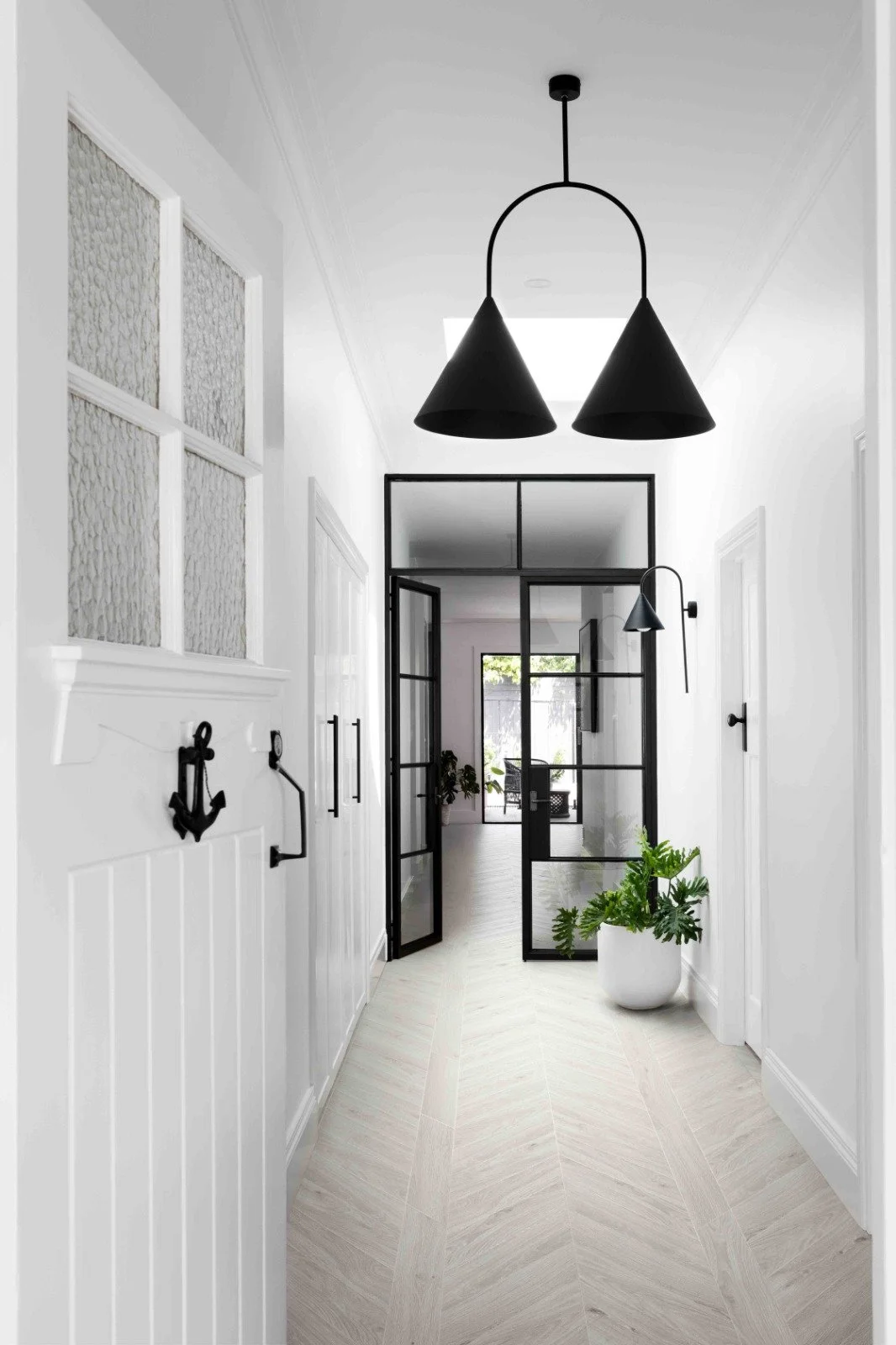
Entryways & Hallways: Durability First
We always prioritise durability in entryways and hallways – these are high-traffic areas that take a beating! Look for tiles that are abrasion-resistant, easy to maintain, and finished in a way that hides dirt and scuffs.
Image: Oltre White Chevron
Designer tips for entryways & hallways:
Porcelain is our go-to for high-traffic areas
Matte or lightly textured finishes wear better than polished (and hide marks)
Larger formats reduce grout lines, create calmer visual flow, and help tight spaces feel more open
What to avoid: Polished tiles that show every mark – particularly lighter colours with little movement. Overly patterned tiles can also feel dominating in a narrow space.
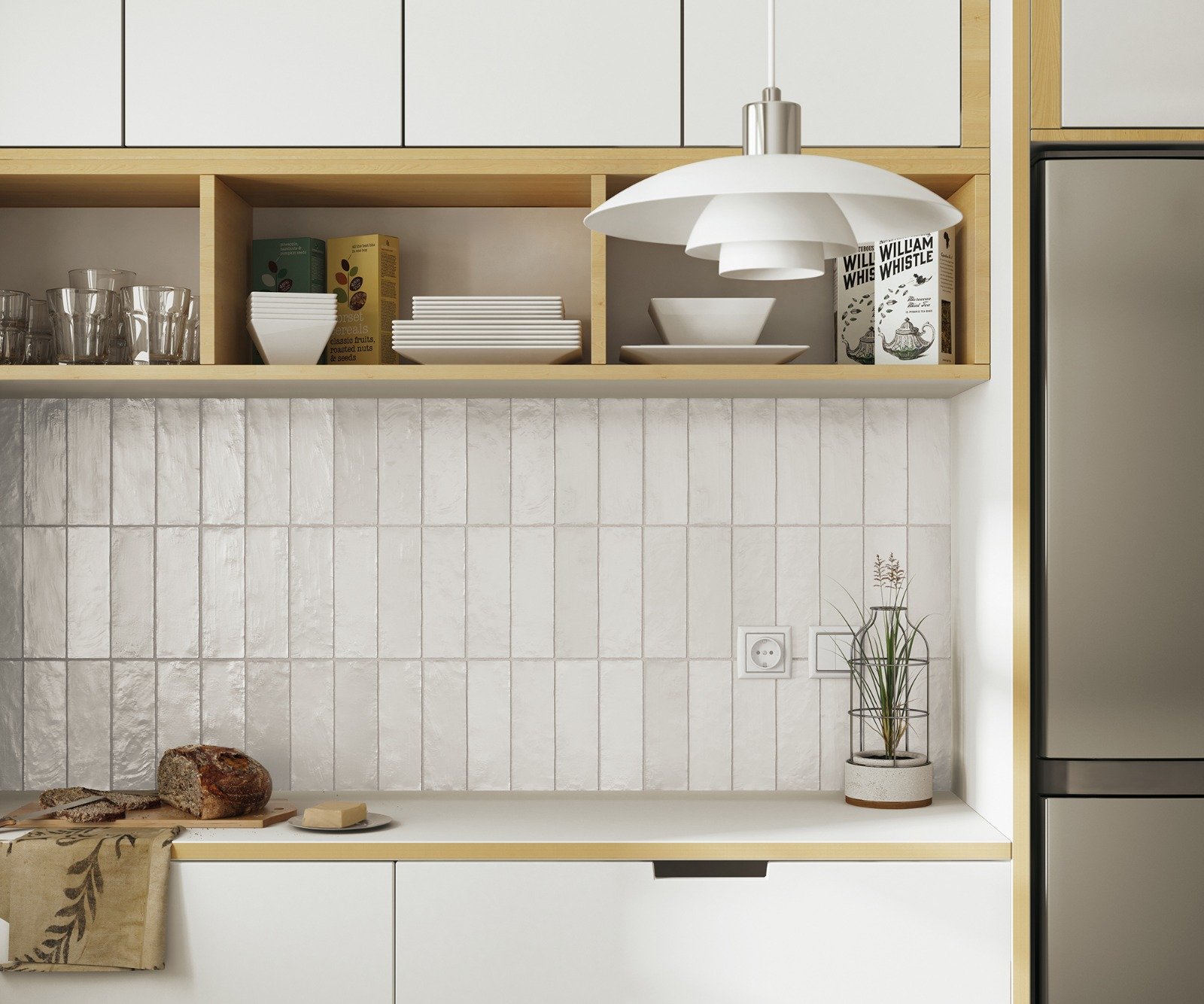
Kitchens: Balancing Beauty with Performance
Kitchen floors need to work hard. We consider slip resistance (things get messy near the sink), easy cleaning, and neutral tones that will complement your joinery long-term. Generally, the floor tile isn't the hero of the kitchen – it supports everything else.
Image: Iris Platinum Subway
Designer tips:
Mid-tone colours are more forgiving than very light or very dark tiles
Choose a suitable slip rating – polished tiles aren't practical here
For splashbacks: We love handmade-look tiles for texture. The subtle variation across batches creates a beautiful, soft texture that elevates any space. Vertical stacking or simple layouts give a modern feel without overwhelming the room.
If you have a heavily textured stone benchtop, pair it back with a simpler splashback tile. If your stone is simple, a textured tile can add interest.
What to avoid: Highly textured or small mosaic tiles in heavy cooking zones – they're difficult to clean and maintain!
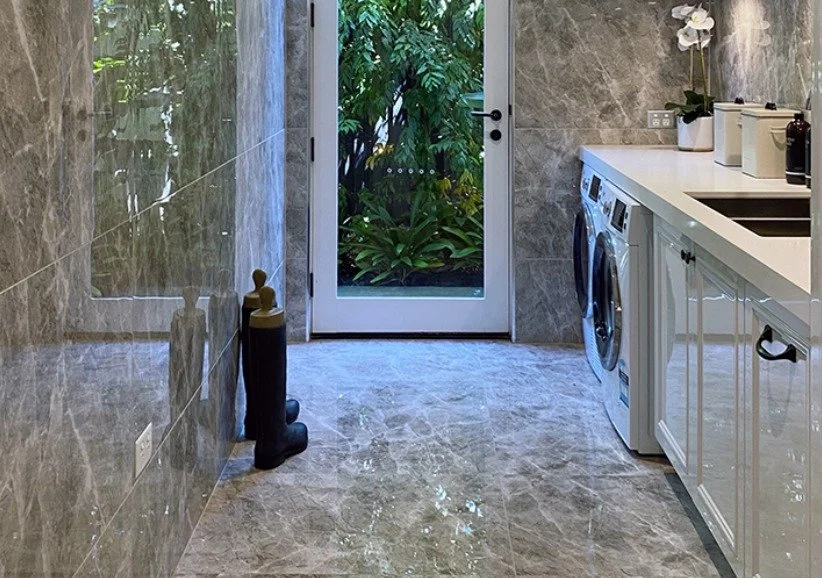
Laundries: Practical Doesn't Have to Mean Plain
We love to have a little fun with laundries whilst keeping them practical. Floor tiles still need to be slip-resistant, easy to clean, and durable – but there's room for a subtle pattern or texture, whether on the floor or splashback.
Image: Euromarmo Grigio
A well-designed laundry elevates daily routines and feels intentional, not like a forgotten space. You spend more time here than you might realise — being a hub for house cleaning, soaking kids clothes — so it's worth making it feel special.
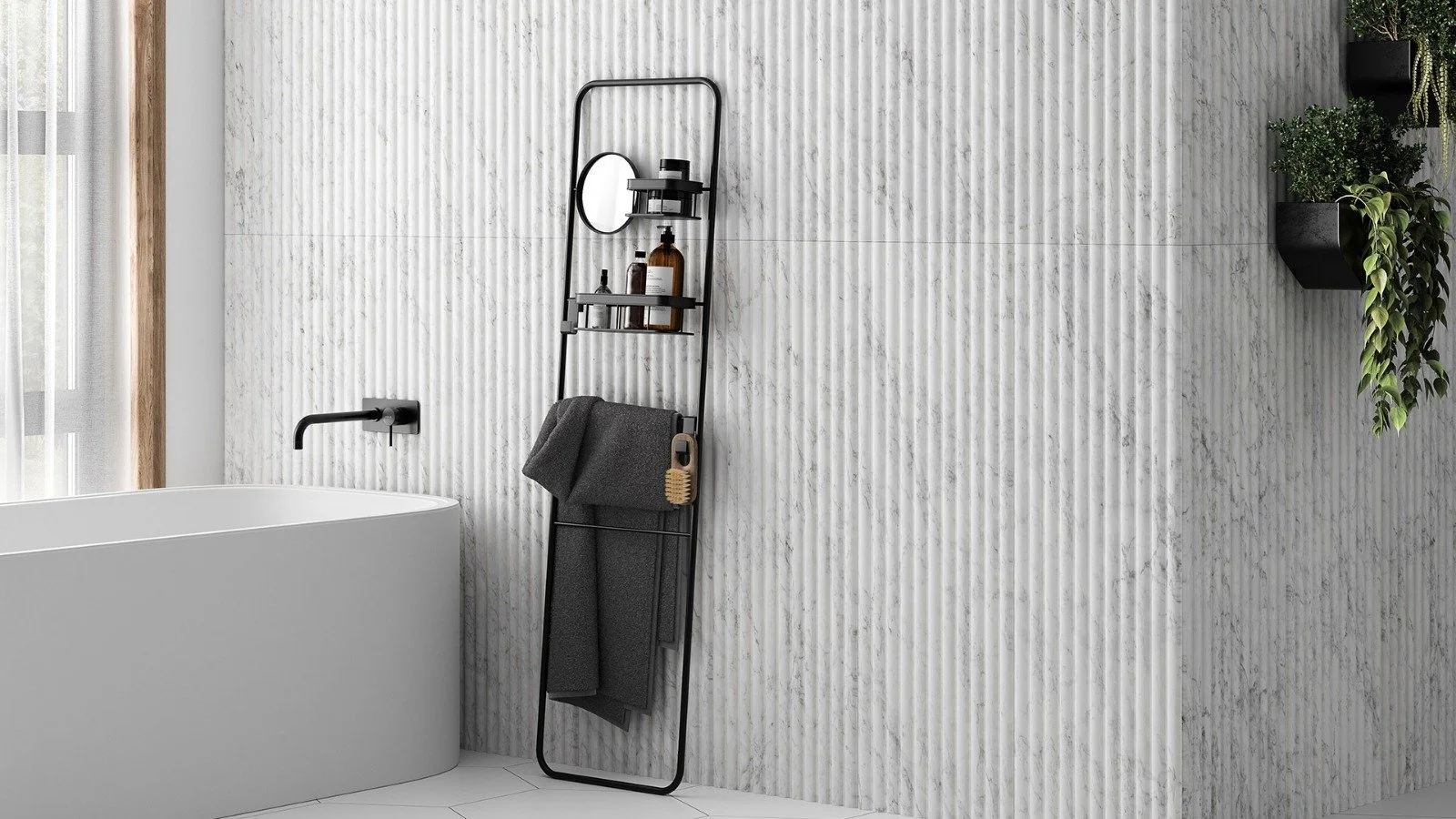
Bathrooms: Designed for Everyday Use
For floors: Some non-negotiables in our opinion – suitable slip ratings (usually P3), especially for the shower. We recommend consistent batches to avoid tonal variation, and careful material selection. We love a marble floor tile, but only if the client understands the maintenance. For most, porcelain is the smarter choice.
Image: Fluted Marmi
For walls: We love large-format tiles to create a sense of grandeur and calm. Soft matte finishes diffuse light beautifully, and vertical layouts from floor to ceiling can elongate a room – especially in homes with lower ceilings. Large formats also reduce grout lines for easier cleaning.
A tip we often use: larger format tiles on the lower walls, with a smaller feature tile above.
What to avoid: Using too many different tiles in one space. And remember – the more times you use a "feature" tile, the less of a feature it becomes.
Final Thoughts
Selecting tiles for your home isn't just about how they look – it's about how you live and how you'll practically use each space for the next 5 to 50 years. The right tile should age gracefully, feel effortless to live with, and be a cohesive part of the overall design of your home. Working with a designer and a trusted supplier ensures your selections are considered, coordinated, and confident – from selection to installation!
Work with Tuesday Lane
Ready to take the guesswork out of your renovation? Tuesday Lane offers full-service interior design for residential and commercial projects across Australia.
→ Book a consultation with Tuesday Lane
Shop the Look
Explore our curated tile collections, handpicked for the spaces mentioned in this post:
→ Shop Porcelain Floor Tiles – Perfect for entryways, kitchens, and bathrooms
→ Shop Feature & Splashback Tiles – Handmade looks and textured finishes
→ Shop Bathroom Tiles – Large format, matt finishes, and slip-rated options
The Design Edit is a monthly collaboration between TileZu and Tuesday Lane. Follow along for designer insights, curated inspiration, and practical tips for creating spaces you'll love.
